Why free events still need tickets (and check-in)
One question tends to appear whenever somebody starts organising a free event for the first time:
“If nobody is paying to attend, why bother with tickets at all?”
It’s a fair question.
In everyday life, we usually associate tickets with payments. Buy a ticket, gain access and enjoy the event.
Organisers, however, tend to look at tickets a little differently.
The longer you spend around events, the more you realise that the payment is often the least important part of the entire process. What organisers really want is information. They want to understand how many people are likely to attend, how much space they’ll need, how many volunteers should be scheduled and whether the event is attracting the audience they hoped for.
And tickets just happen to be one of the simplest ways to collect that information.
Built for real-world check-in.
See plans and choose what fits your workflow.
Interest and attendance are rarely the same thing
Over the years, I’ve seen plenty of free events generate enormous interest online.
A community meetup announces its first edition and suddenly hundreds of people click “Interested.” A charity event starts gaining traction on social media. A public lecture gets shared around local groups and everybody begins talking about it.
Those numbers can feel reassuring. But, unfortunately, they can also be wildly misleading.
Anyone who has organised events for long enough learns that online interest and actual attendance are two very different things. Some people forget. Others change their plans. And some genuinely want to attend but something unexpected comes up on the day. Of course, there are always people who click an attendance button simply because they might show up if nothing else gets in the way.
By the time the event begins, the crowd standing at the entrance can look very different from what social media suggested a week earlier.
A free ticket won’t eliminate that uncertainty completely, but it usually provides a far more realistic picture than likes, shares and attendance buttons ever will.
Capacity still matters
One of the biggest misconceptions about free events is that attendance numbers somehow become less important when nobody is paying.
In reality, the opposite is often true.
A workshop with twenty available seats still only has twenty available seats. A lecture hall still has a maximum occupancy. A conference room still has fire safety limits. Even outdoor events often need to consider security, staffing and infrastructure requirements long before the first attendee arrives.
None of those limitations disappear simply because admission is free.
Without registrations, organisers often find themselves relying on educated guesses. Sometimes those guesses work out perfectly. Other times they discover that twice as many people arrived as expected, or that resources were prepared for an audience that never appeared.
Neither scenario is particularly enjoyable.
Communication becomes much easier
Registrations provide another benefit that doesn’t receive much attention until something unexpected happens.
Most of the time, organisers don’t think much about attendee communication beyond the initial announcement.
Then a venue changes or the weather suddenly decides to become part of the planning process.
Situations like these are surprisingly common in the event world, and when they happen, having a direct way to contact attendees becomes incredibly valuable.
Sending an email with updated information is usually far more effective than posting an announcement on social media and hoping everyone happens to see it.
For many organisers, that communication channel alone is reason enough to use registrations, regardless of whether the event is free or paid.
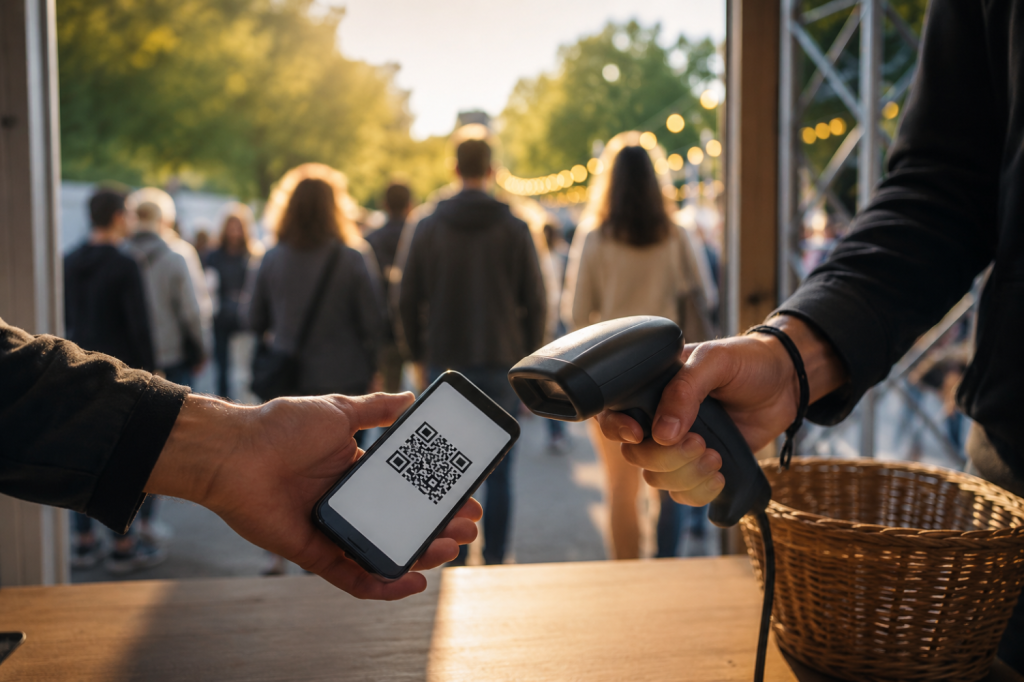
Registrations tell you who planned to come. Check-in tells you who actually did.
Most organisers stop thinking about attendance once registrations are collected.
The event is planned, the numbers look good and everything appears to be under control.
The interesting thing is that registrations only tell half the story because hundred people may register for a free event and only seventy show up.
Without some form of check-in, organisers are often left with a significant blind spot.
They know how many people expressed interest. They know how many people registered. What they don’t know is how many people actually attended.
That distinction becomes surprisingly important once the event is over.
Sponsors may ask for attendance figures. Partners may want to understand the event’s reach. Organisers planning next year’s edition often need reliable data to decide whether the venue was appropriate, whether the programme worked well and whether promotional efforts translated into real attendance.
Registrations answer one question:
“Who said they were coming?”
Check-in answers a different one:
“Who actually walked through the door?”
Both numbers are equally important and serve very different purposes.
Charity events face the same challenge
This is particularly relevant for charity events.
People often assume that fundraising is the only number that matters. While donations are obviously important, they rarely tell the entire story.
Organisers usually want to understand how many people attended, whether participation is growing from one year to the next and how effectively the event is reaching its intended audience.
Sponsors and partners often want to know the same thing.
Attendance data helps demonstrate impact, evaluate future opportunities and make better decisions when planning the next event.
None of that requires charging for admission.
It simply requires knowing who showed up.
Better information leads to better events
Whether an event is free or paid, organisers face many of the same challenges.
They need to estimate attendance, communicate with participants, prepare resources and evaluate results once everything is over.
Tickets help before the event begins and check-in helps once it starts.
Together, they provide something every organiser wants a little more of: clarity.
Because in the end, the goal isn’t simply to know how many people were interested in attending.
It’s to understand how many people actually showed up and experienced what you worked so hard to create.