One of the things that always fascinated me about the event industry is how quickly it changes your relationship with time.
In most professions, there is a fairly clear distinction between working hours and everything else. Problems discovered late in the day can often wait until tomorrow morning. A task that isn’t finished on Friday afternoon will probably still be there on Monday.
Events have never been quite that polite.
Anyone who has spent enough time around festivals, conferences, theatre productions, fashion shows or concerts knows that important issues tend to appear when they feel like it. Sometimes it’s a supplier running late. Other time it’s a technical problem that nobody could have predicted. And sometimes it’s simply a consequence of having hundreds of people, dozens of moving parts and a very fixed deadline that refuses to move no matter what happens.
After a few years, you stop being surprised by this and learn to work around it. More importantly, you realize that staying calm is usually far more useful than being frustrated.
That doesn’t mean people in the event industry enjoy receiving calls at odd hours. It simply means they understand that some things cannot wait until a more convenient moment.
Most attendees never see the hard part
One of the more interesting aspects of event work is that the vast majority of it remains invisible.
Attendees see the venue, the stage, the speakers, the performers, the food, the lighting and the atmosphere. What they don’t see are the months of preparation, the countless meetings, the backup plans, the late-night phone calls and the endless stream of small decisions that happen long before the doors open.
And that’s basically how it should be.
The purpose of all that planning is not to make people notice how much work went into the event. The purpose is to make the event feel effortless.
When everything goes according to plan, attendees rarely think about logistics. They simply enjoy the experience.
People working behind the scenes understand that this is often the highest compliment an event can receive. If nobody is talking about the queue, the sound system, the registration desk or the venue layout, chances are those things work exactly as intended.
Success in this industry is often measured by how many potential problems were solved before anyone else even realised they existed.
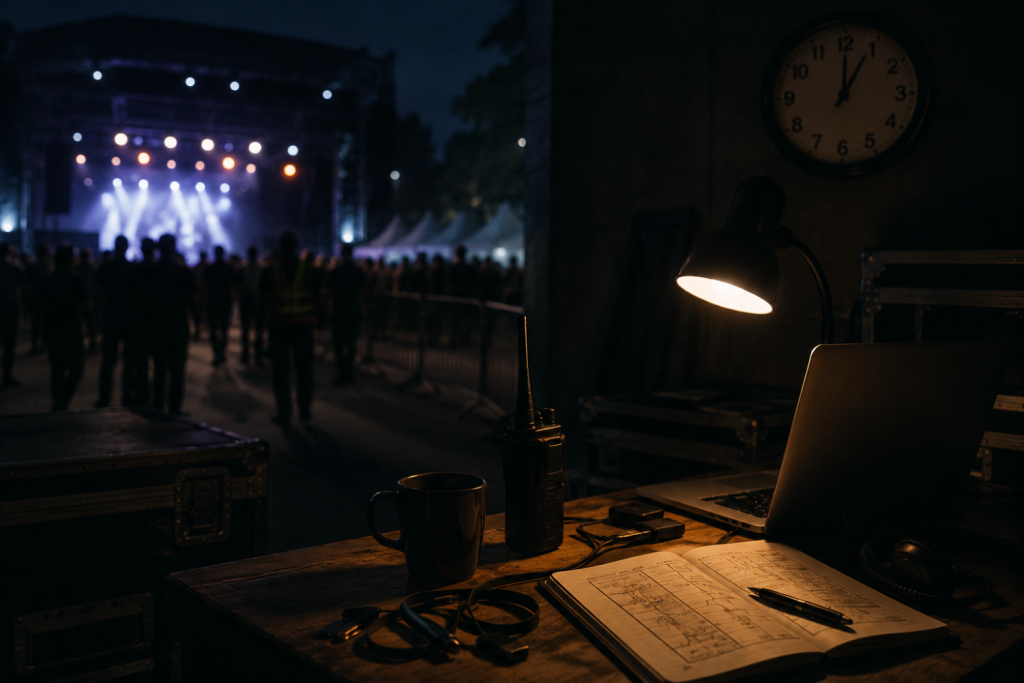
Why event organisers think differently
Spending enough years around events changes the way you look at planning.
People outside the industry often imagine that successful events are the result of detailed plans being executed exactly as written. Those who have actually worked events know that reality is usually a little messier than that.
Good organisers certainly make plans, but they also spend a great deal of time thinking about what happens if those plans need to change.
Weather conditions shift, deliveries arrive late, equipment fails, schedules move, unexpected situations appear out of nowhere.
And none of this is unusual. In fact, it is so common that experienced event professionals rarely think of it as a crisis. It’s simply part of the environment they operate in.
Over time, this creates a particular mindset. You stop assuming that everything will go perfectly and start focusing on making sure the event remains successful even when it doesn’t.
That mindset influences everything from staffing decisions and venue layouts to attendee flow and entry procedures.
What this has to do with Hydra
Although Hydra is a software product, its roots are firmly planted in the event industry.
Long before we started building check-in tools, we spent years working on actual events. We worked alongside organisers, production teams, technicians, suppliers and countless other people responsible for making sure attendees had a great experience.
Those experiences shaped the way we think about event technology today.
When someone tells us they are expecting thousands of attendees, we don’t just see a number on a screen. We immediately start thinking about entrance points, queues, staffing levels, bottlenecks and all the little details that determine whether the first few minutes of an attendee’s experience feel smooth or frustrating. Call it professional deformation if you will.
The check-in process might only represent a small part of an event, but it occupies a unique position because it sits directly between the attendee and everything they came to experience.
Nobody buys a ticket because they are excited about standing in line just as much as nobody travels to a conference because they can’t wait to spend twenty minutes looking for the correct registration desk.
People come for the event itself. So, the job of check-in is simply to get them there as smoothly as possible.
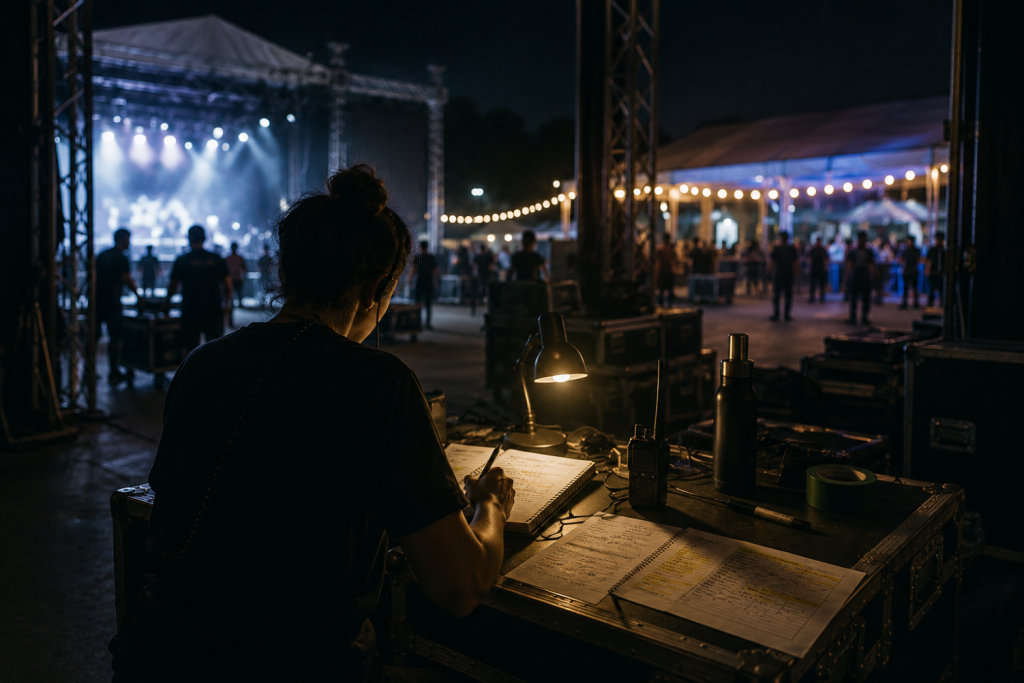
The old habits never really go away
Every now and then, a support request arrives late in the evening or during a weekend.
Sometimes the event starts the next morning and sometimes the doors are already open.
As we talked about in the previous post, in some cases the issue turns out to be critical, and sometimes it turns out to be something relatively minor that simply feels much larger when an event is approaching.
Behind every support request there is usually an organiser trying to solve a real-world problem under a real-world deadline.
That is something we understand very well because we have been on the other side of those conversations ourselves.
No, we are not claiming to provide magical 24/7 support. We are also not suggesting that every request receives an immediate response.
What we are saying is much simpler. People who spend enough time around events quickly learn that important problems rarely happen during office hours. They tend to appear when people are setting up venues, preparing opening procedures, running rehearsals or making final checks before attendees arrive.
Once you’ve lived through enough of those situations, you develop a certain appreciation for urgency and a certain tolerance for unusual working hours.
Perhaps that’s why people in the event industry often have such a strange relationship with sleep.
The best events feel effortless
Looking back, one lesson appears again and again regardless of the type of event.
The best events are usually the ones that feel effortless from the attendee’s perspective.
Guests arrive, find their entrance, scan their ticket and move on with their day without giving much thought to the process itself. That’s usually a good sign.
What attendees rarely see is the amount of preparation required to create that experience.
The planning, coordination, troubleshooting and decision-making all happen behind the scenes so that the event itself can remain front and centre.
That’s the goal.
And if nobody notices how much work went into making that happen, that’s usually a sign that everyone involved did their job very well.
P.S. If you’re reading this while preparing for an event and wondering whether you’ll get a full night’s sleep before opening day, you’re probably asking the wrong industry. 😄